

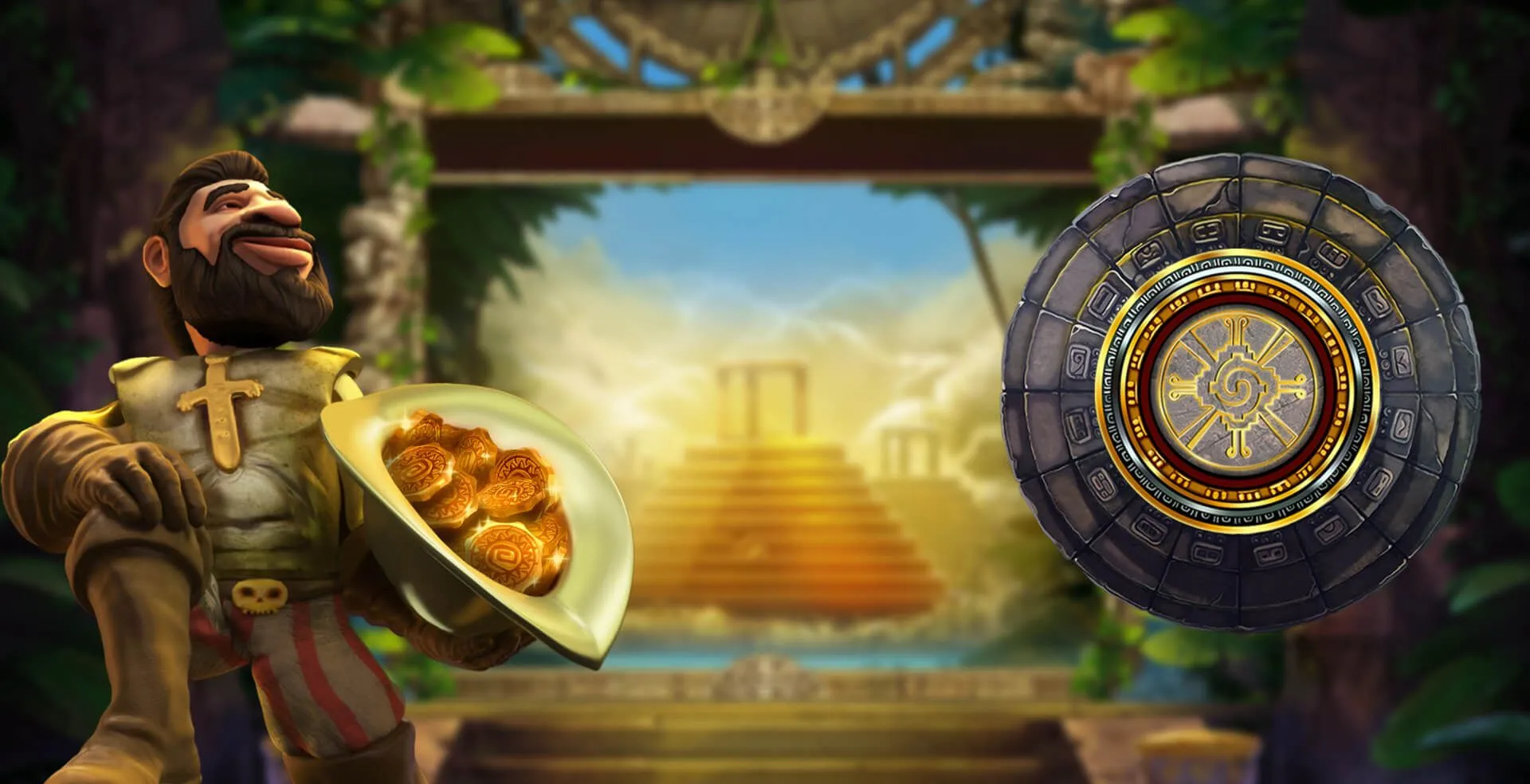

Gonzo Quest Megaways Bonus Drop 🇨🇦💎
Deposit and score a 100% match up to C$500 + 200 Free Spins—perfect for extra shots at big Megaways wins.
- Fast signup, instant play ⚡
- Spins can stretch your bankroll 🎰
- Canada-friendly payments 🍁
Gonzo’s Quest Megaways Slot Review (Canada): What to Expect Before You Spin
If you’re looking for a gonzo’s quest megaways slot review with a practical, Canada-focused angle, you’re in the right place. Gonzo Quest Megaways takes the classic NetEnt adventure theme and rebuilds it on Big Time Gaming’s Megaways engine—meaning the original’s simple 5x3 grid is replaced with a far more volatile, high-variance format designed for bigger potential swings. Canadian players typically land on pages like this for three reasons: they want to understand the payout potential (including what a “big win” really looks like), they want clarity on RTP and volatility, and they want to know whether the game fits their bankroll and play style.
This review is written for real decision-making. You’ll find a feature-by-feature breakdown, a clear table of key specs, strategy pointers tailored to risk tolerance, and an honest discussion of where the game shines and where it can frustrate. You’ll also see how the bonus mechanics work in practice, why the Avalanche multipliers matter, and what you should know about the gonzo quest megaways jackpot conversation (spoiler: it’s more about max win potential than a progressive meter).
As you read, you’ll see natural references to Gonzo Quest Megaways so you can easily jump back to the main hub and keep comparing options.
Quick Verdict for Canadian Players: Is It Worth Playing?
Gonzo Quest Megaways is worth playing if you enjoy modern, high-volatility slots with frequent “near misses” and occasional explosive feature rounds. The Megaways mechanic dramatically increases reel ways and alters hit frequency compared to the original Gonzo’s Quest, and that change will be felt in your session. You can have long stretches where wins trickle in modestly, followed by a bonus round where multipliers stack and the game suddenly feels like it’s paying a different player.
For Canadians, the “value” question often comes down to bankroll management and entertainment time. If you prefer steady, lower-volatility gameplay—where your balance lasts longer—this may not be your best daily driver. But if you’re chasing that cinematic hit where multipliers snowball during free spins, this game delivers the kind of momentum that many high-volatility fans want.
Another key point: expectations. A lot of players arrive searching for gonzo quest megaways big win clips or reading about a gonzo quest megaways jackpot, and it’s easy to assume a jackpot-style outcome is common. It isn’t. The game can pay extremely well when features align, but those moments are naturally rare. The best approach is to treat it like a premium, feature-driven slot rather than a “jackpot slot” in the strict progressive sense.
Key Game Details at a Glance (RTP, Volatility, Bet Range)
Before you even think about strategy, the technical basics matter. Canadian players often compare slots by RTP, volatility, and betting flexibility—especially because CAD bankrolls can vary widely, and many players want to test a slot at low stakes first.
Gonzo Quest Megaways generally sits in the high-volatility category, which means the distribution of wins is uneven. You may see lots of small base-game hits mixed with dry spells, while the bigger payouts tend to come from free spins with stacked multipliers. That profile is ideal for players who can handle variance, but it can feel punishing if you’re expecting smooth balance movement.
Here’s a practical snapshot of what most players want to know before committing time:
| Feature | What It Means for Your Play | Why It Matters in Canada |
|---|---|---|
| RTP (Return to Player) | Long-term theoretical payback rate | Helps you compare value across slots at Canadian casinos |
| Volatility | How “swingy” results are | High volatility = bigger peaks/valleys; manage CAD bankroll accordingly |
| Megaways System | Up to thousands of ways to win per spin | Changes hit frequency and win distribution vs classic 5-reel slots |
| Bet Range | Minimum to maximum bet per spin | Makes it accessible for both casual and higher-stakes sessions |
| Features | Avalanches, multipliers, free spins, bonus buy (where available) | Determines whether the game is feature-driven or base-game-driven |
Because online casinos can sometimes offer slightly different configurations, it’s smart to verify the displayed RTP in the game’s info panel where you play. Still, the overall behaviour—high volatility, feature-centric paydays—remains consistent.
Theme, Graphics, and Overall Experience: How It Feels to Play
NetEnt’s Gonzo brand has always had a strong identity: a lighthearted conquistador, a jungle setting, and that “temple expedition” vibe that feels more playful than serious. Gonzo Quest Megaways keeps that identity while modernizing the reel structure and pacing. The visuals are crisp, colourful, and clean, with stone symbols and carved icons that stand out well on both desktop and mobile.
From a Canadian player’s perspective, usability is a big part of enjoyment. The interface is straightforward, and you don’t need to dig through menus to find stake controls, autoplay (where supported), and the paytable. The core rhythm of the game—spin, avalanche, multiplier increase—becomes intuitive quickly, which is helpful if you’re comparing several Megaways titles and don’t want a steep learning curve.
The audio supports the adventure theme without becoming overly repetitive. During feature rounds, the sound design does its job: it signals when the multipliers are rising and when you’re in a potentially meaningful sequence of avalanches. If you like slots that feel “alive” when momentum builds, this one has that quality.
How the Megaways Mechanic Works in Gonzo Quest Megaways
Megaways is more than a buzzword—it changes the fundamental math and feel of the slot. Instead of each reel having a fixed number of symbol positions, the reels can display different heights on each spin. That creates a varying number of ways to win, sometimes reaching into the thousands. For players who haven’t tried Megaways before, this can feel like the game is “busier,” with more symbol movement and more opportunities for chain reactions.
In Gonzo Quest Megaways, the changing reel heights pair naturally with the Avalanche feature. You’ll see sequences where the grid keeps reshaping itself, and that’s where many of the game’s most exciting moments happen. It’s not uncommon to see multiple consecutive wins from one paid spin if symbols keep landing favourably after each collapse.
The practical takeaway is this: Megaways increases variability. It doesn’t automatically mean higher RTP, but it can create more dynamic sessions. You can have a stretch where you get plenty of small hits because many ways-to-win combinations exist, yet still be “down” because those wins don’t scale without multipliers. Conversely, one strong free spins run can swing your session from negative to very positive.
Megaways vs the Original Gonzo’s Quest
If you loved the original for its simplicity and reliable flow, Megaways is a different beast. The classic game’s appeal was that it felt predictable: you knew the grid, you understood the pacing, and you could gauge when you were having a decent run. With Megaways, the pace is similar but the outcomes are more extreme.
For Canadians deciding between the two, think about your preference:
- If you want steadier entertainment time and a more classic slot feel, the original might suit you better.
- If you want higher potential peaks and can tolerate dry spells, Megaways is the upgrade.
Symbols, Paytable, and Win Mechanics (What Actually Pays?)
In any proper gonzo’s quest megaways slot review, the paytable matters because it tells you where value sits. Typically, the highest-paying symbols are themed around treasure and artefacts, while the lower-value symbols are standard card ranks. The exact payouts depend on stake and how the game defines its Megaways win evaluation, but the principle is consistent: premium symbols drive meaningful wins, especially during multiplier-enhanced avalanche sequences.
What many players miss is that “ways to win” games reward combinations from left to right across adjacent reels, but you don’t need them to land on a fixed payline. That means your eye should adjust: you’re not watching lines; you’re watching clusters across the leftmost reels. When the reels are tall and you have many symbol positions, you can sometimes land multiple combinations at once.
Another thing to understand is that base game wins can look frequent while still being low value. This is normal for Megaways slots. The real money often comes from:
- Premium symbol hits during high multiplier states.
- Free spins sequences with repeated avalanches.
- Occasional “perfect storm” moments where the grid height and symbol distribution align.
Approaching the game with that understanding helps you avoid the common trap of overestimating how often big payouts appear.
Avalanche Feature and Multipliers: The Engine Behind Big Moments
Avalanches are the heart of the Gonzo experience. When a winning combination lands, the symbols involved disappear, and new symbols drop in to fill the gaps. In Megaways format, that dropping action is even more dramatic because reel heights vary—so a single avalanche can completely change the grid’s shape and potential.
The multiplier mechanic ties directly into avalanche chains. As you land consecutive wins from one paid spin (or during free spins), the multiplier steps up. That’s the “momentum” that players chase, because once you’re at a meaningful multiplier level, even medium-strength symbol hits can become legitimately profitable.
This is where a gonzo quest megaways big win is most likely to happen: not from a single static spin, but from a chain. The emotional arc of the game is built around the idea that one win can lead to another, and another, and suddenly you’re watching a multiplier climb while the reels keep refilling. When it stops, it often stops abruptly—so those sequences feel intense.
What to Watch for During Avalanche Chains
If you’re trying to interpret whether a session is “warming up,” focus on patterns that can lead to bigger results:
- Taller reels appearing more often (more symbol positions can create more ways to connect).
- Premium symbols landing in bulk on the leftmost reels.
- Frequent two- or three-step avalanche chains, even if small (a sign you may be seeing decent symbol flow).
None of these guarantee a payout spike, but they help you understand the game’s rhythm instead of assuming each spin is isolated.
Free Spins and Bonus Features: How to Trigger and How They Pay
Most players come to this game for the free spins, because that’s where the multipliers tend to matter most. Trigger conditions vary by configuration, but usually involve landing a certain number of scatter symbols. Once triggered, you enter a free spins mode where avalanches and multipliers can create the kind of escalating payout sequences Megaways fans love.
The key difference between base game and free spins is not just “free plays.” It’s how quickly the multipliers can become meaningful and how long avalanche chains can persist. In a standard high-volatility slot, you may go many spins without a noteworthy moment, but a good free spins run can compress all that excitement into a short burst.
In practical terms, you should expect:
- Some free spins rounds will be underwhelming, especially if premium symbols don’t land.
- A smaller number of rounds will be excellent, where multipliers ramp and avalanches chain.
- Very rare rounds will deliver the kind of numbers that end up as shareable “big win” screenshots.
Bonus Buy (If Available Where You Play)
Some casinos offer a bonus buy option for certain slots, allowing you to pay a fixed price to enter the free spins mode immediately. Whether you see this depends on the casino’s rules and your province’s regulatory environment, so availability can differ for Canadian players.
If bonus buy is available, treat it as a different risk profile rather than a shortcut. Buying features increases variance: you’re paying upfront for a chance at a strong outcome. It can be entertaining if you’re deliberately allocating a portion of your bankroll to “feature chasing,” but it’s not inherently better value than spinning naturally. Many players prefer to spin in normally to enjoy the base game and let bonuses come when they come.
RTP, Variance, and Bankroll Reality for Canadians
Canadian players often bring a pragmatic mindset to online slots: you want entertainment, but you also want to avoid needless burn. With Gonzo Quest Megaways, the biggest factor affecting your session isn’t the theme or even the Megaways count—it’s volatility. High volatility means the game can test your patience and bankroll before it rewards you.
RTP tells you the theoretical long-run return, but it doesn’t tell you what your next 200 spins will look like. In a high-volatility game, short sessions can be wildly different from one another. One player can hit a fantastic free spins run in the first ten minutes, while another can play for an hour without a memorable feature.
If you’re playing in CAD, it helps to set expectations in dollars, not just spins. Decide what you’re comfortable losing in a session and what would count as a “win” worth cashing out. Canadian casinos also often include wagering requirements on bonuses, and high-volatility slots can be double-edged there: great if you hit, rough if you don’t. Always read the bonus terms and consider playing with cash if you want full control.
A Practical Bankroll Approach (Simple and Realistic)
Here’s a straightforward way many experienced players manage high-volatility Megaways slots:
- Pick a session bankroll (e.g., $50, $100, $200) that you can afford as entertainment.
- Choose a stake that gives you at least 150–300 spins if you want time-on-device (for example, $0.20–$0.60 per spin on a $50–$100 bankroll, depending on your comfort).
- If you hit a feature and your balance spikes, consider reducing stake or locking in profit rather than instantly increasing bets.
This isn’t about “beating” the game—it’s about controlling the experience so that the swings don’t control you.
Strategy Tips: How to Play Gonzo Quest Megaways More Intelligently
There’s no guaranteed strategy for slot outcomes, but you can absolutely make smarter choices about how you play. In this gonzo’s quest megaways slot review, the most useful advice is about matching the game’s volatility to your goals. If you want the best chance at lasting longer, you should focus on stake sizing and session structure, not on chasing losses.
Open the Current Gonzo Game Route
A practical starting point is deciding whether you’re playing for entertainment, for a chance at a big moment, or for a balance between both. Megaways slots often tempt players to increase bets after a few small wins or a near-miss bonus trigger. That’s exactly when disciplined players do the opposite: they keep bets consistent, because volatility can swing against you quickly.
Also consider your device and play environment. If you’re on mobile in Canada, you might play in shorter bursts, which increases the feeling of randomness. Longer sessions can help you experience the game’s full cycle, but only if your bankroll supports it.
Tips by Risk Profile
If you want clear guidance, use this risk-based approach:
- Low-to-moderate risk: Keep stakes low, avoid bonus buys, and aim for longer sessions. Take small wins and stop if you hit your loss limit.
- Moderate risk: Play a stable stake, allow for some volatility, and set a “cash-out at X% profit” rule if you get a good bonus.
- High risk: Consider feature buys only if you’re comfortable with quick losses. Treat it as entertainment, not a reliable way to get returns.
When to Walk Away (Yes, This Matters)
Because Gonzo Quest Megaways can produce sudden spikes, it’s easy to keep playing after a strong win “just to see if it happens again.” A better approach is to decide in advance:
- A profit target (for example, cash out when you’re up 50%–100% on your session).
- A hard stop-loss (when you hit it, you stop regardless of how “due” the game feels).
These rules keep the game fun and prevent the common volatility trap.
Gonzo Quest Megaways Big Win Potential: What It Looks Like in Real Play
Players searching for gonzo quest megaways big win content usually want to know: how do the biggest wins happen, and how rare are they? In most cases, big wins come from a free spins run where multiple factors line up: tall reels, premium symbol density, repeated avalanches, and multipliers climbing to levels where each subsequent hit is amplified.
It’s important to separate “big win” from “max win.” A big win can mean different things depending on your stake. For a $0.20 bettor, a few hundred dollars can feel massive. For someone spinning at $5, that same return may be modest. The game is built to create occasional standout moments, but it’s not designed to constantly print high multiples.
From a session perspective, the biggest wins often feel like this:
- The base game is relatively quiet, with modest hits.
- You trigger free spins after a stretch of average play.
- Early free spins are small, then a chain starts.
- The multiplier rises, premium symbols align, and the total jumps quickly.
If you’re watching for that moment, remember: you’re not aiming for a single “perfect spin.” You’re hoping for a sequence.
Gonzo Quest Megaways Jackpot: What People Mean (and What the Game Actually Offers)
A lot of players use “jackpot” as shorthand for “huge win,” especially when they see content titles like “Gonzo Quest Megaways jackpot” on streaming platforms. In most versions of this game, there isn’t a traditional progressive jackpot meter that grows across the network. Instead, the “jackpot” idea is usually referring to the maximum win potential or a very high-multiple feature outcome.
That distinction matters because it affects your expectations. Progressive jackpot slots behave differently: you’re often paying for the chance at a rare, life-changing top prize, usually with lower base-game value. Gonzo Quest Megaways, by contrast, is a feature-focused slot where the top-end potential is driven by multipliers and avalanche chains. You’re still dealing with rare high outcomes, but it’s not the same jackpot structure.
For Canadian players, the practical advice is to read the in-game information panel. If a jackpot is present, it will usually be clearly labelled with a prize structure. If you don’t see it, assume the “jackpot” language is informal and refers to max win potential rather than a progressive prize.
How to Think About “Jackpot” Chasing Responsibly
If your goal is specifically a jackpot mechanic, you may want to compare this title to dedicated jackpot slots. If your goal is simply the possibility of a very large win relative to stake, Gonzo Quest Megaways can still satisfy that urge—just with different mechanics and a different risk profile.
The healthy mindset is to treat the top-end outcome as a bonus possibility, not a plan. That way, you can enjoy the journey—theme, avalanches, features—without feeling disappointed when a rare result doesn’t show up.
Mobile Play in Canada: Performance, Controls, and Session Comfort
Canadian players increasingly play slots on mobile, and Gonzo Quest Megaways is generally well-suited to that. The interface scales cleanly, the spin button and stake controls are easy to reach, and the animations don’t clutter the screen. Because the game relies on avalanches and frequent symbol movement, performance matters—especially if you’re playing on older devices.
On a stable connection, the experience is smooth. On weaker connections, you may notice delays in animations or longer load times, and that can affect your enjoyment because the game’s excitement depends on that fluid “drop and cascade” feel. If you’re commuting or playing on cellular data, consider lowering other background usage to keep gameplay responsive.
Another practical consideration is session length. Mobile play often means shorter sessions, which can amplify the perception of volatility. If you do a 10-minute session and don’t trigger a feature, it can feel like the game is cold. That doesn’t necessarily mean anything—it’s just variance. If you want a more complete sense of the slot, try a longer session at lower stakes.
Where Gonzo Quest Megaways Fits Among Megaways Slots (Comparison and Alternatives)
Megaways slots come in many styles: some are pure action, some are more strategic with multiple bonus modes, and some are designed around a single signature feature. Gonzo Quest Megaways sits in the “signature mechanic” camp. It’s about avalanches and multipliers, with the Megaways engine creating more dynamic grids.
Compared to other Megaways titles, this one tends to appeal to players who like a clean design and a straightforward feature set. You don’t need to learn multiple bonus games or track complex meters. That simplicity is a benefit, especially if you’re choosing a slot for casual play.
At the same time, simplicity can mean fewer “second chances” if variance isn’t going your way. Some modern slots include extra bonus triggers, collect features, or guaranteed minimum bonuses. Gonzo Quest Megaways leans more traditional: you spin, you avalanche, you hope for the feature round, and the multipliers do the heavy lifting.
A Quick Comparison Table (What You’re Really Choosing)
| Type of Megaways Slot | What It Typically Offers | Who It Suits |
|---|---|---|
| Classic-style Megaways (like this) | Straightforward base + free spins, multiplier-driven | Players who want clarity, not complexity |
| Feature-heavy Megaways | Multiple bonus modes, mini-games, collect mechanics | Players who like variety and layered features |
| Jackpot-focused slots | Progressive prizes, rarer top-end hits | Players who specifically want jackpot mechanics |
| Low-to-mid volatility slots | More frequent medium wins, fewer extreme swings | Players who prioritize balance longevity |
If you’re exploring options, it’s worth returning to Gonzo Quest Megaways to compare this review with other pages and find the volatility profile you enjoy most.
Payment, Payout Speed, and Trust Factors (What Canadians Care About)
While the slot itself is the main focus, Canadian players also care about where they’re playing it. Payout reliability, payment methods, and support quality matter just as much as the game features. The slot can be excellent, but your experience depends on the casino’s withdrawal process, verification requirements, and how quickly they handle cash-outs.
In Canada, common payment methods include Interac, credit/debit cards, e-wallets, and increasingly cryptocurrency at some operators. The best advice is to pick a casino that offers fast, transparent withdrawals in CAD (or at least clear FX handling), and that has a solid reputation for processing times. Always check whether the casino has withdrawal limits, fees, or extra KYC steps that could slow you down.
If you’re playing Gonzo Quest Megaways with bonus funds, read the wagering requirements and any slot contribution rules. Some casinos treat certain games differently, and high-volatility slots can either help or hurt you depending on how your session unfolds. For many players, the simplest path is playing with cash to keep withdrawals straightforward.
Responsible Play and Entertainment Value (Especially for High Volatility)
High-volatility slots are fun because they can surprise you, but that same quality can encourage chasing. Gonzo Quest Megaways is the kind of game where you might feel like you’re “one bonus away” from turning things around. That mindset is common—and it’s exactly why setting boundaries matters.
If you’re playing in Canada, use the responsible gambling tools available through your casino: deposit limits, loss limits, time-outs, and self-exclusion options. These tools aren’t only for people with serious problems; they’re practical guardrails that keep entertainment from turning into regret. Even a simple time limit can help, because this game’s avalanche sequences can be mesmerizing.
A healthy approach is to define the purpose of your session. If you’re spinning for entertainment, judge success by enjoyment and time spent, not by whether you left with profit. If you do hit a strong win, treat it like a bonus outcome and consider locking in a withdrawal rather than immediately pushing your luck.
Final Thoughts: Who Should Play Gonzo Quest Megaways (and Who Should Skip It)
Gonzo Quest Megaways is a strong choice for Canadian players who like the Megaways format, enjoy avalanche mechanics, and are comfortable with high volatility. The game delivers an engaging adventure theme, a smooth modern interface, and the kind of multiplier-driven feature potential that can create memorable sessions. If your idea of a good slot is one that can stay quiet for a while and then suddenly explode into a big result, this fits the bill.
On the other hand, if you want consistent mid-sized hits, predictable bankroll pacing, or a true progressive jackpot mechanic, you may find this game frustrating. The “jackpot” talk around the title is often about max win potential, not a progressive prize pool, so it’s better to approach it as a feature slot rather than a jackpot slot.
If you want to keep exploring and compare gameplay notes, volatility profiles, and feature structures, revisit the main Gonzo Quest Megaways page and use this review as your baseline. When you treat the game with the right expectations—fun-first, volatility-aware—it becomes exactly what it’s designed to be: an adventure slot that occasionally rewards patience with a genuinely exciting chain of avalanches and multipliers.
Gonzo Quest Megaways FAQs (Canada)
Is Gonzo Quest Megaways a good slot for Canadian players?
Gonzo Quest Megaways is popular in Canada thanks to its Megaways reel system, avalanche-style wins, and straightforward gameplay. In our gonzo’s quest megaways slot review, it stands out for volatility that can suit players who enjoy bigger swings rather than frequent small wins. Always choose a licensed online casino that accepts Canadian players and offers responsible gambling tools.
How does the Megaways system work in Gonzo Quest Megaways?
Megaways means the number of symbols on each reel can change on every spin, creating many possible ways to win. This gives you a constantly shifting set of win combinations rather than fixed paylines. The result is more variety in outcomes, but it doesn’t guarantee a win.
What is a “Gonzo Quest Megaways big win,” and how do players get one?
A gonzo quest megaways big win usually happens when high-value symbols connect across multiple reels, often boosted by consecutive avalanche drops. Because wins can cascade and multipliers can increase within a feature, payouts can grow quickly in the right sequence. Keep in mind results are random, and big wins are not typical on every session.
Is there a Gonzo Quest Megaways jackpot?
Gonzo Quest Megaways does not typically feature a fixed progressive jackpot meter like some jackpot slots. When people search “gonzo quest megaways jackpot,” they’re often referring to the game’s maximum potential win rather than a community-funded progressive prize. Check the game info panel at your casino for the exact maximum payout and rules.
What is the RTP for Gonzo Quest Megaways?
RTP (Return to Player) is the theoretical percentage a slot may pay back over a very large number of spins. Gonzo Quest Megaways often appears with different RTP settings depending on the casino’s configuration, so it’s best to confirm inside the game or on the casino’s help page. RTP doesn’t predict short-term results, and variance can be significant.
Is Gonzo Quest Megaways high volatility?
Yes, it’s generally considered a higher-volatility slot, meaning wins may be less frequent but can be larger when they hit. That’s a key point many readers look for in a gonzo’s quest megaways slot review. If you prefer steadier, smaller payouts, a lower-volatility slot may be a better fit.
Can I play Gonzo Quest Megaways for free in Canada?
Many online casinos offer a demo mode where you can try Gonzo Quest Megaways without wagering real money. Demo play is useful for learning the avalanche feature, paylines/ways structure, and overall pace. Availability can vary by operator and province, so check the casino’s game lobby.
What are avalanches and multipliers in Gonzo Quest Megaways?
Instead of spinning each reel again after a win, winning symbols can disappear and new ones drop in, creating “avalanches.” Consecutive wins during the same spin can increase multipliers, which can boost payouts noticeably. These mechanics are a big reason players chase a gonzo quest megaways big win, though outcomes remain random.
Does Gonzo Quest Megaways have bonus features or free spins?
Yes, the game includes feature rounds such as free spins, and they’re often where the highest potential payouts occur. During features, avalanche chains and multipliers can combine to produce stronger win potential compared to base gameplay. Exact triggering rules and feature details are shown in the in-game paytable.
How can I play Gonzo Quest Megaways responsibly in Canada?
Set a budget and time limit before you play, and avoid chasing losses—especially on higher-volatility titles. Use casino tools like deposit limits, session reminders, and self-exclusion if needed, and only play at licensed sites available in your province/territory. If gambling stops being fun, seek support through Canadian responsible gambling resources in your region.
Last updated: 27 August 2026, 13:33 UTC