

Gonzo's Quest Megaways demo guide
What to check on the demo page
The current captured page is the /demo route and carries the visible title “Gonzo Megaways Free Play: Try Gonzo's Quest”. Treat the page as a place to examine the game information and controls shown at the time of your visit, rather than as proof that particular features, stakes or account options will always be available.
Start by reading every notice presented beside or before the game area. Check whether the page explains how the session works, whether any controls are inactive and whether separate terms apply. Do not assume that wording such as “free play” confirms eligibility, permanent availability or access from every location. Those details have not been verified for this guide.
Understand the feature information
The verified Evolution game information describes an Avalanche feature. It also says that multipliers can increase during a spin. Use those two points as a starting place when reviewing the current instructions, but rely on the rules displayed with the game for the exact operation of each feature.
Look for a help, information or rules control and read its description of the Avalanche sequence. Pay attention to what begins the sequence, what happens after each step and when the sequence ends. For multipliers, check when they can increase, whether they reset and how the displayed value is applied. If the current interface does not answer those questions clearly, avoid filling the gaps with assumptions.
Review the controls before starting
Before interacting with the page, identify each visible control and confirm what it does. Check the displayed labels, any adjustable settings and the information panel. If a control is unfamiliar, consult the on-page rules before using it. This is particularly important for any option that changes the pace or automates part of a session.
Keep the first review focused on observation. Watch how the page presents outcomes, how the Avalanche feature is indicated and where the current multiplier appears. A demo-style page can help you become familiar with terminology and screen layout, but it should not be used to predict later results or to infer conditions that are not stated.
Do not infer unverified figures
No numerical return-to-player figure, maximum win, stake range or game availability has been verified for this rewrite. Check the current game information directly if you need any of those details. If a figure is missing, unclear or shown differently in separate areas, treat it as unresolved until the page provides a consistent explanation.
The same caution applies to promotional language. This guide does not verify a licence, offer amount, payment method, withdrawal time, eligibility condition or account requirement. A title or button is not a substitute for detailed terms. Read any current conditions in full and distinguish game instructions from account, promotional or payment information.
Use a simple review checklist
- Confirm that you are viewing the intended page and read the current notices.
- Open the available rules or information panel before interacting with the game area.
- Find the explanation of the Avalanche feature and note how its sequence is described.
- Check where multiplier information appears and how the rules say it changes during a spin.
- Review every visible control instead of guessing from its icon or position.
- Do not assume any numerical RTP, maximum win, stakes or continuing availability.
- Separate game mechanics from any account, offer, payment or eligibility wording.
- Stop and recheck the rules whenever the interface does not match your understanding.
Keep the demo in perspective
The practical purpose of this guide is to help you inspect what the current site actually shows. Concentrate on learning the visible terminology, locating the rules and understanding how the Avalanche and multiplier descriptions relate to the on-screen presentation. Avoid treating a short session as evidence of how future outcomes will unfold.
If you want more context before continuing, consult the site's how-to-play material for general instructions or its games section for other listed pages. Use those resources to clarify navigation and terminology, not to assume that any particular game, feature or condition is currently available.
Final check before you continue
Pause after reading the rules and summarise the feature sequence in your own words. You should be able to identify where the Avalanche information appears, where multipliers are displayed and which questions remain unanswered. If important information is absent, the cautious choice is to leave it unresolved rather than rely on promotional wording or memory.
Page content can be reviewed at a particular time, so compare this guide with what is presently visible. The current rules and notices should remain the reference point for any detail beyond the limited facts verified here.
Last updated: 27 August 2026, 13:33 UTC
Gonzo Quest Megaways Demo
| Attribute | Value |
|---|---|
| Provider | Red Tiger (licensed NetEnt brand) |
| RTP | 96.00% (varies by casino version) |
| Volatility | High |
| Max Win | 21,000x your bet |
| Megaways | Up to 117,649 |
| Reels / Layout | 6 reels (2–7 symbols per reel) |
| Features | Avalanches, Earthquake Feature, Unbreakable Wilds, Free Falls, Multipliers, Megaways Expansion |
| Min Bet | 0.10 |
| Max Bet | 4.00 |
| Release Year | 2020 |
| Theme | Exploration / Inca / Lost City Treasure |
Top Gonzo Megaways Free Play Offers

Jackpot City Casino
- Over 500 games
- Swift payouts
- Canadian currency supported
100% up to $1,600 CAD + 50 Free Spins
Lucky Nugget Casino
- Established reputation
- Generous loyalty rewards
- Secure payment options
150% up to $200 CAD + 100 Free Spins
Spin Casino
- Excellent mobile play
- Extensive game selection
- Top-tier support
$1,000 CAD Welcome Package + 50 Free Spins
Gonzo’s Quest Megaways Demo & Settings Guide for Canadian Players
Gonzo’s Quest Megaways is one of the most popular avalanche-slot adventures online, and the free demo version is the safest way to explore its mechanics before risking real money. On this page we’ll focus on how the Gonzo megaways free play mode behaves, how the volatility is paced, what to expect from avalanche chains and multipliers, and how the game settings work on both desktop and mobile in Canada.
You’ll also learn why the Gonzo Quest Megaways free play demo and the real-money version use the same RNG logic, why they can feel different, and how to use the practice mode intelligently rather than relying on it as a prediction tool.
Demo vs Real-Money Behaviour: What Actually Changes?
In well‑regulated markets and reputable casinos, the key rule is simple: demo and real‑money modes must use the same game math. That means the following are identical in both versions of Gonzo’s Quest Megaways:
- Random Number Generator (RNG) algorithm
- Return to Player (RTP) setting used by the casino
- Volatility profile (how swingy the game is)
- Paytable and symbol values
- Maximum win potential
- Avalanche mechanics and multiplier progression
What can change is how you experience the game, because in demo mode you’re playing with pretend credits and different psychology.
RNG Parity: Same Engine, Different Wallet
Both demo and real-money Gonzo’s Quest Megaways are driven by the same RNG logic built into the game server. Every spin (or avalanche step) is determined by a random seed and a sequence of calculations that map to:
- The number of Megaways (positions per reel) on that spin
- The symbols that land on each position
- Whether a win occurs
- Whether symbols explode (avalanche) and new symbols drop
- Whether free drops (free spins) trigger
From a technical standpoint, the demo on gonzo-megaways.com should:
- Request outcomes from the same kind of RNG engine as the casino version.
- Follow the same rules for avalanches and multiplier stepping.
- Use the same hit-rate and win-distribution curve.
The RNG parity principle means:
- You’re seeing realistic behaviour in demo.
- But any individual demo session does not predict your results with cash.
Why Demo Can Feel Different Than Real Play
Even with identical math, the perception shifts once your own money is involved. This is driven by several psychological and structural factors:
- Session length – In demo, you may spin longer, trying different settings. With real money you might stop earlier after a loss streak, so you see fewer long avalanche chains.
- Bet sizing behaviour – Many players use max bet or high bets in demo because it’s not real money. In cash play they drop to safer stakes, so the absolute win amounts look smaller and potentially less exciting.
- Loss sensitivity – A 100‑spin no‑feature run in demo feels like a curiosity. With real money it feels like the game “went cold,” even though it’s the same variance.
- Memory bias – Large demo wins are quickly forgotten; large real-money wins (or losses) are emotionally sticky and change your view of volatility.
The core takeaway is straightforward: Gonzo megaways free play is an accurate practice environment for how the game behaves, but your real‑money results will always be unique because of randomness and your own decisions about when to stop, change bets, or chase features.
Core Game Mechanics in Demo Mode
Before we dive into settings, it’s important to understand how Gonzo’s Quest Megaways behaves under the hood when you’re playing the free demo.
Megaways Layout
Every spin, each reel can display a variable number of symbols, typically between 2 and 7. That means:
- The maximum number of ways to win can reach up to 117,649 Megaways.
- Some spins will feel cramped (fewer symbols on reels; fewer ways).
- Other spins will look “wide” with many symbol spaces and more win potential.
This variability is part of the volatility design. Low‑ways spins keep the average payout in check, while occasional high‑ways spins set the stage for big chains.
Avalanche (Cascading) Wins
Instead of traditional spinning reels that stop and settle, you’ll see stone blocks dropping into place. When you land a winning combination:
- Winning symbols explode and disappear.
- New blocks fall from above into the empty positions.
- If another win forms, the sequence continues.
- Each new avalanche within the same paid spin increases the multiplier.
This can create exciting chains where the first hit is small but later avalanches in the same spin pay much larger amounts.
Multiplier Progression
Gonzo’s Quest Megaways uses a stepped multiplier that increases during avalanches. There are two distinct stages:
Base game multipliers (typical structure):
- 1st avalanche: x1
- 2nd avalanche: x2
- 3rd avalanche: x3
- 4th+ avalanche: x5 (remains at x5 for further hits in that spin)
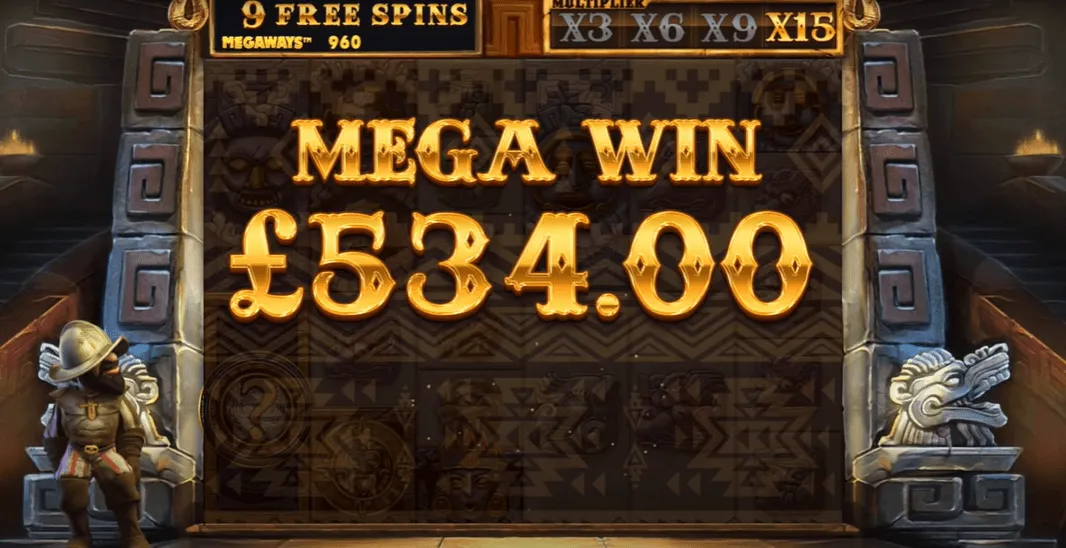
Free falls (free spins) multipliers (enhanced):
- 1st avalanche: x3
- 2nd avalanche: x6
- 3rd avalanche: x9
- 4th+ avalanche: x15 (capped for that spin)
Important behaviour details:
- Multipliers progress only within one paid spin (or one free fall). When the avalanches stop, the next paid spin resets to the base multiplier.
- Free falls use a higher ladder, which is why they feel so powerful: a modest hit at x15 can overshadow many dead spins.
- In demo, you’ll see these ladders triggered with the same frequency and distribution as in the real-money game.
Wilds, Unbreakable Wilds & Feature Effects
Gonzo’s Quest Megaways also includes special wild mechanisms that influence avalanche patterns:
- Standard wild blocks substitute for regular pay symbols, helping connect ways across the reels.
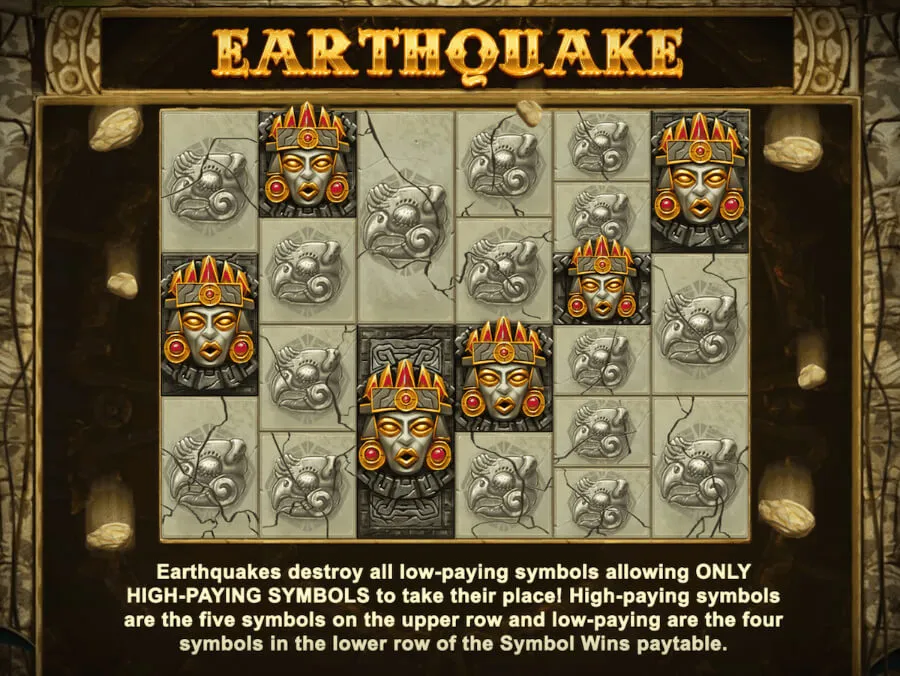
- Unbreakable wilds (if active in the version you’re playing) stay in place during specific avalanches instead of exploding with a win, allowing additional chains.
This contributes to the “streaky” feel of the game:
- When wilds land in the right spots, the avalanche/multiplier ladder can ramp quickly.
- When they don’t, you can get many low-paying or dead spins in a row.
The demo reflects all of these patterns exactly as the paid game does.
Volatility Pacing in Demo: What to Expect
Gonzo’s Quest Megaways is medium-high to high volatility. That means the following is normal, and you’ll see it in both demo and real-money:
- Extended dry spells of small or no wins.
- Clustered streaks of hits when the avalanches go your way.
- Swingy free fall sessions, where some bonus rounds pay very little and others can be huge.
How Volatility Feels Over Short Sessions
In a typical short demo session (say 100–200 spins), you might experience one of several patterns:
- Many dead spins, a couple of small avalanche chains, no bonus triggered.
- A modest base-game hit from a 3–4 step avalanche, no bonus.
- One free falls feature that pays modestly (e.g., 20–50x) with no major avalanche.
- A rare “spike” session, where you hit a longer avalanche or a big free fall with multipliers reaching x9–x15.
Because most players in demo tend to play faster and for longer, they are slightly more likely to witness at least one “spike” result simply by volume of spins, which can create the illusion that demo is luckier.
Hit Frequency vs. Perceived Frequency
Hit frequency is the statistical measure of how often any winning outcome occurs, including small wins that don’t cover your bet. Perceived hit frequency is what your brain registers as meaningful.
Key points for Gonzo’s Quest Megaways:
- Real hit frequency includes:
- Tiny base wins (often < 1x bet)
- One-step avalanches with no multiplier boost
- Small line hits that visually feel minor
- Perceived hit frequency often:
- Ignores tiny wins
- Focuses on big avalanche chains and free falls
This is why the same hit frequency can feel different:
- In fast demo mode, you may blast through hits so quickly that only the big events (multipliers x5 or higher, or free falls) stay in your memory.
- With real money, every small loss is emotionally charged, so you feel like “nothing is hitting,” even though statistically the game is behaving as designed.
Avalanche Patterns & Multiplier Streaks in Practice
Open the Current Gonzo Game Route
Avalanche-based Megaways slots like Gonzo Quest Megaways are designed around streak patterns rather than isolated hits. Understanding the rhythm helps you make sense of demo outcomes.
Common Avalanche Chain Types
While the RNG is fully random, certain pattern archetypes recur often enough that players recognize them:
Single-hit spin
- One combination lands, pays, and no further win appears after the drop.
- Multiplier progression: x1 only (base) or x3 only (free falls).
Two-step chain
- First win triggers an avalanche that creates a second win.
- Multiplier progression: x1 → x2 (base) or x3 → x6 (free falls).
Three-step chain
- Three consecutive wins in the same paid spin.
- Base: x1 → x2 → x3
- Free falls: x3 → x6 → x9
Four+ step “run”
- Four or more consecutive avalanches; now you’re hitting x5 in base or x15 in free falls.
- These runs are relatively rare but generate the largest memorable wins.
Example Perceived Frequency of Avalanche Lengths
The distribution below is illustrative (not an official paytable) but reflects how the game tends to feel over time:
| Avalanche length in a single spin | How often it feels like you see it | Typical emotional impact |
|---|---|---|
| 0 wins (dead spin) | Very common | Mild frustration |
| 1 win only | Very common | Neutral; “nothing big” |
| 2-step chain | Regular | Mild excitement |
| 3-step chain | Occasional | Noticeable thrill |
| 4+ steps | Rare | High excitement |
You will see this same distribution whether you are in the Gonzos Quest Megaways free demo or in the real-money mode at a Canadian casino.
Multiplier Streaks During Free Falls
Free falls (free spins) are all about multiplier streaks. The starting multiplier is already high (x3), so the main goal is staying in the avalanche chain:
- A three-step chain in free falls can already be impactful (x3 → x6 → x9).
- A four-step chain or more pushing to x15 is what creates the highlight wins.
- Most free fall rounds will include a mix of short chains and no-win spins; a minority will produce one or two high-multiplier avalanches.
Expect the following in demo:
- Many bonus rounds that pay relatively small amounts compared to your triggering stake.
- Occasional free fall sequences that feel “dead” (few or no avalanches reaching high multipliers).
- A small percentage of rounds that deliver impressive x9–x15 wins – these are what drive the game’s advertised max win potential.
Hit Frequency Perception: Demo vs Real Play
Even with identical hit rates, your perception during demo and real-money sessions diverges. The table below summarises key differences:
| Aspect | Demo mode (gonzo megaways free play) | Real-money mode (online casino) |
|---|---|---|
| Emotional stake | Low – play money | High – real CAD balance |
| Attention to small wins | Low; easily ignored | Higher; often feel insufficient but still noticed |
| Memory of big events | Moderate; fun but disposable | Strong; big wins and painful losses are highly memorable |
| Session length | Often longer; tendency to keep spinning | Often shorter; budget or loss limits end the session |
| Perceived hit frequency | “It hits often, but big wins are rare” | “It doesn’t hit often and big wins are very rare” |
| Behaviour after dry spells | Continue out of curiosity | Stop, reduce bet, or tilt-chase losses |
Recognizing this gap helps keep expectations realistic when you switch from gonzo megaways free play to cash mode.
Game Settings in Gonzo’s Quest Megaways Demo
Whether you’re using the demo on gonzo-megaways.com or playing at a Canadian casino, the user interface (UI) controls are almost identical. The difference is simply that in demo, you’re wagering virtual credits instead of CAD.
1. Bet Size Controls
You’ll usually see bet adjustment buttons (e.g., “+” and “–”) or a bet selector near the spin button.
Common characteristics (actual limits may vary by operator):
- Minimum bet: Often around C$0.10–C$0.20 per spin.
- Standard range: Up to C$10–C$20 per spin at many casinos.
- Demo mapping: The demo will display equivalent bet amounts (e.g., 1.00, 2.00), but these are virtual credits, not cash.
In the demo:
- You can freely increase the bet to see how the paytable scales.
- Bet changes affect the size of wins proportionally but do not change the odds of triggering avalanches or features.
Best practice for demo:
- Start at realistic stakes you might use in real play (e.g., C$0.20–C$1.00) so the win and loss sizes feel comparable.
2. Autoplay Settings
Autoplay lets the game spin automatically a set number of times. In the demo version, autoplay usually includes:
- Spin count presets – e.g., 10, 25, 50, 100 spins.
- Option to stop on feature – Autoplay pauses when free falls are triggered.
- Stop on balance conditions (in demo, just a visual reference):
- Stop after losing a specified amount.
- Stop after winning more than a certain amount.
In real-money mode, regulated Canadian sites may also require loss and single-win limits before starting autoplay, to encourage safer play.
In demo:
- These settings help you simulate budget limits without risk.
- You can observe volatility over longer stretches without manually clicking spin.
UX tip:
- Use autoplay in demo to watch how often free falls land and how often long avalanche chains appear. Just remember that your sample is still small compared to the massive spin volumes used in math models.
3. Turbo / Quick-Spin Options
Many versions of Gonzo’s Quest Megaways provide a turbo or quick spin toggle, sometimes represented by:
- A lightning bolt icon.
- A “fast forward” symbol.
- Or a setting labelled “Quick Spin” or “Turbo Mode.”
Enabling turbo typically:
- Shortens or skips some spin animations.
- Speeds up avalanches slightly.
- Increases the number of spins you can complete per minute.
Gameplay impact:
- No change to RNG – outcomes are identical; only animation timing is affected.
- Higher perceived volatility – because you witness more dead spins in a shorter real‑world timeframe.
In demo:
- Turbo mode is useful for exploring how avalanche chains and multipliers behave over hundreds of spins quickly.
- But it can also “flatten” your perception: big wins can feel less dramatic when they flash by.
4. Sound & Visual Settings
Gonzo’s Quest Megaways combines atmospheric jungle sounds, stone-crumble effects, and character voice lines. In the settings menu, you can usually control:
- Master sound – On/off toggle for all audio.
- Music volume – Adjust or mute only the background music.
- Effects volume – Control the strength of win sounds, avalanches, and clicks.
In demo mode, adjusting sound:
- Doesn’t affect game outcomes but can change how immersive the experience is.
- Can reduce fatigue if you’re running long autoplay sessions for practice.
Other common visual options (depending on the version):
- Graphics quality (High/Medium/Low).
- Intro screens toggles.
These are purely usability choices and identical in demo and real-money.
5. Paytable, Rules & Help Sections
The info or menu button typically opens:
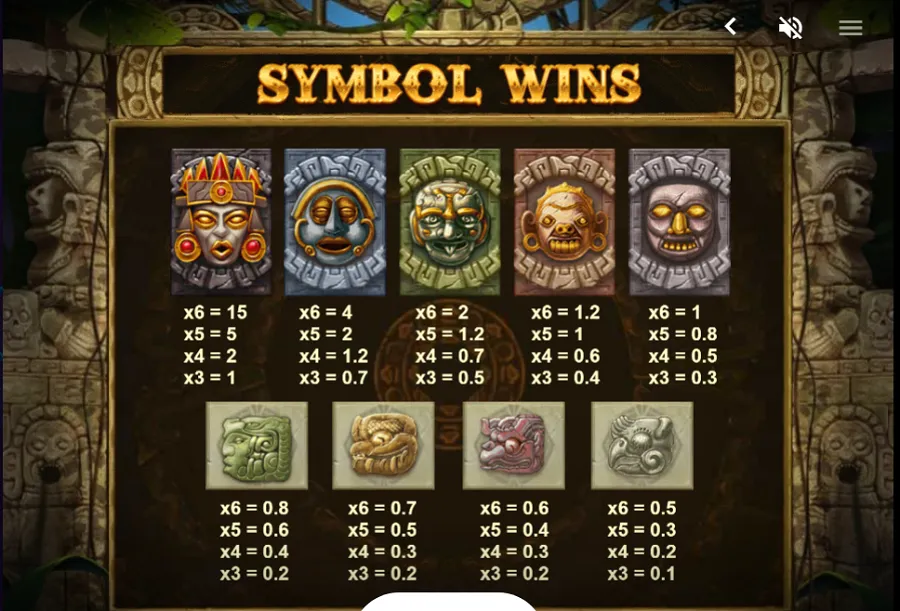
- Full paytable with symbol values.
- Explanation of Megaways and avalanches.
- Multiplier ladder description for base and free falls.
- Details on wilds, scatters, and free falls triggers.
In demo play, this is your ideal learning environment:
- You can cross-reference what you see on screen with what’s explained in the rules.
- You can confirm that big hits usually require extended chains, high Megaways counts, or both.
Using Demo Mode for Effective Practice
The gonzo megaways free play demo is more than just entertainment; it’s a practical tool to build competence without financial risk.
Practice Use Case #1: Learning Volatility & Session Rhythm
Objective: Understand how quickly your balance can swing up or down.
Steps:
- Set a virtual budget in your mind (e.g., 200 demo credits = C$20).
- Choose a realistic bet (e.g., 0.20 credits = C$0.20 equivalent).
- Play 100–200 spins at normal speed without changing bets.
- Observe:
- How often free falls trigger.
- How deep the longest losing streak is.
- How much of the “budget” you could theoretically lose.
Learning outcome:
- You get a feel for whether the swings are tolerable for you in real money.
Practice Use Case #2: Adjusting Bets & Session Length
Objective: Find a comfortable bet size for your risk tolerance.
Steps:
- Decide how long you typically want to play in cash (e.g., 30–45 minutes).
- In demo, simulate that length (estimate 400–600 spins depending on speed).
- Try different demo bet levels:
- Small bet (e.g., 0.20)
- Medium (e.g., 0.60–1.00)
- High relative to budget (e.g., 2.00 or more)
- After each session, note:
- How big your potential swings were in “budget” terms.
- How often a high multiplier win salvaged a downtrend.
Learning outcome:
- You can later pick a real-money bet that roughly matches your comfort zone, instead of guessing on the fly.
Practice Use Case #3: Observing Avalanche Patterns & Multipliers
Objective: Get used to the visual language of avalanches so that real-money play feels intuitive.
Steps:
- Play in demo with turbo off to fully see each avalanche.
- Focus on how wins chain: which reels tend to complete combos? How do wilds influence them?
- Pay attention to:
- When the multiplier steps up.
- How often you actually hit x5 in base or x15 in free falls.
- Repeat using turbo on to see if your perception changes.
Learning outcome:
- You’ll better understand that most spins will never reach maximum multipliers, which combats unrealistic expectations.
Practice Use Case #4: Testing Autoplay & Stopping Rules
Objective: Build discipline around stopping conditions.
Steps:
- In demo, set autoplay for 50–100 spins.
- Decide rules like:
- Stop if you’re down 50 credits.
- Stop if you’re up 100 credits.
- Always exit the game after a free falls round over 100x.
- Follow those rules strictly in demo, even though it’s play money.
Learning outcome:
- You train yourself to follow pre-set rules and avoid chasing losses when it’s your own money.
Demo Limitations: What It Cannot Teach You
While gonzo megaways free mode is mathematically authentic, it has built‑in limitations:
- No emotional pressure
- You don’t experience the same stress, fear, or excitement that may change your decisions with real Cad funds.
- Unlimited “rebuy”
- When the demo credits run out, you can usually refresh. This makes downswings feel less meaningful.
- Overconfidence from singular big wins
- Hitting one huge demo win can condition you to expect similar luck in real play, which is statistically unlikely.
- No cash-out decisions
- You never face the “do I stop now and bank this?” question, which is a major part of real-money UX.
Therefore, treat demo as a training simulator:
- It’s ideal for learning mechanics, patterns, and settings.
- It is not evidence that you are “on a lucky streak.”
Device Experience: Desktop vs Mobile Demo
Whether you play the demo of Gonzo Quest Megaways on a desktop browser or a mobile device in Canada, the underlying game is the same, but the experience can differ.
Desktop
- Wider view of reels and multipliers, making avalanche chains easy to follow.
- Convenient access to settings, paytables, and autoplay configuration.
- Good for longer, analytical demo sessions.
Mobile (Portrait or Landscape)
- Optimised UI with stacked buttons and simplified menus.
- Tap‑friendly controls for bet sizes, autoplay, and turbo.
- Great for quick practice bursts but can encourage faster, less reflective play if you’re not careful.
The randomness and volatility remain unchanged. Decide which device you’re most likely to use for real-money play and practice there to align your expectations with the actual experience you’ll have.
Frequently Asked Questions About Gonzo’s Quest Megaways Demo
Is the demo rigged to pay more than the real game?
No, not when you play a reputable, licensed version. The RNG, paytable, RTP, and volatility are the same in both demo and real-money modes. Differences in perception come from session length, bet sizing, and the lack of emotional risk in demo.
Can I trigger the maximum win in demo mode?
Yes. The mathematical potential is the same. However, the maximum advertised win is extremely rare in both demo and real play, requiring a specific combination of high Megaways, long avalanche chains, and top multipliers in free falls.
Does changing the bet change my odds?
No. Adjusting the bet only scales the size of wins and losses. The probability of hitting a given avalanche chain or free falls round is unchanged. This is true in both the gonzo megaways free play demo and the real-money version.
Why do I get more big wins in demo?
Most players:
- Spin much more in demo.
- Use higher bets.
- Remember the big demo hits and ignore all the small sessions where nothing interesting happened.
This creates a recall bias that makes demo seem “hotter” even though it runs on the same numbers.
Can I use demo results to predict real-money outcomes?
No. Each spin is independent. Game math is long-term; short demo runs cannot forecast your personal results with real money. Use demo for learning and comfort, not for prediction.
Strategic Takeaways Before You Switch to Real Money
To wrap up, here are the most important practical insights from the Gonzo Quest Megaways free play experience:
- Demo and real versions share the same RNG and volatility. Any perceived difference is psychological, not mathematical.
- Volatility is high. Expect long dead stretches and occasional clustered wins, especially in free falls with boosted multipliers.
- Avalanche chains are central. Most spins will end after one or two wins; four+ step chains are rare but crucial to big payouts.
- Hit frequency can feel lower than it is. Small wins and near-misses don’t register as strongly as big events.
- Settings matter for UX, not odds. Bet size, autoplay, turbo, and sound change how the game feels but never influence the RNG.
- Use demo intentionally. Practice realistic bet levels, experiment with autoplay and stopping rules, and observe your tolerance for swings.
If you approach gonzo megaways free play as a training ground—rather than a preview of your future luck—you’ll be far better prepared to enjoy Gonzo’s Quest Megaways responsibly when and if you decide to play with real money at a licensed Canadian online casino.